Redefine Healthy Aging With Functional Training


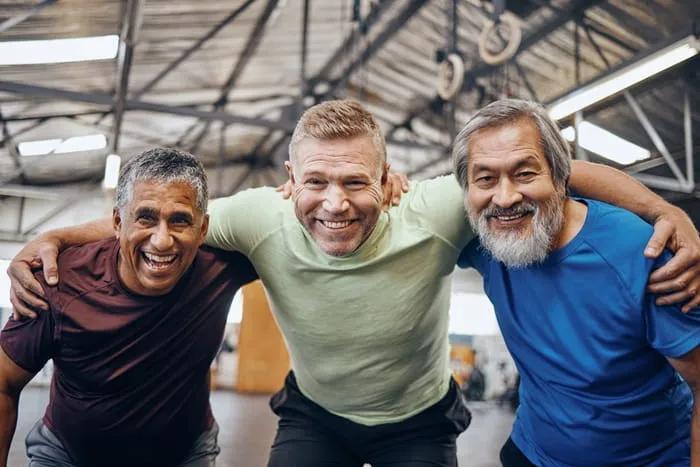
As people enter middle age, many begin to notice declines in muscle strength and balance, but this doesn’t have to be the case. As a fitness professional, you can play a crucial role in helping the people you work with maintain their health and independence. And while traditional cardio and strength training are beneficial, they may not be enough. Exercise intervention studies suggest that functional training offers even greater advantages when it comes to healthy aging.
True Functional Training
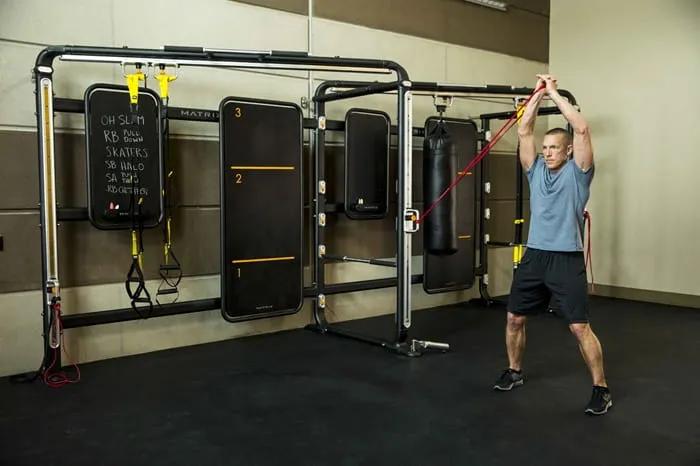
Many exercises could be categorized as both traditional and functional training, so what’s the difference? At its core, functional training has more balance-promoting exercises and requires movement in more planes of motion. It tends to offer multi-joint movements and asymmetrical or diagonal loading patterns. It’s even possible that the coordination demands of functional training spark more brain connections than traditional training,1 helping members plan and execute daily tasks with greater confidence.
The Science of Functional Training
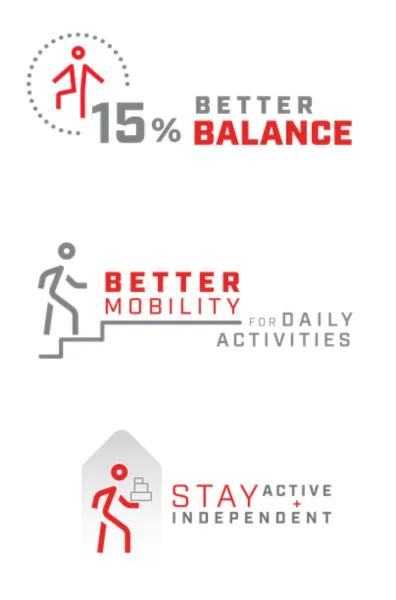
Traditional strength training and functional training have similar effects on body composition.2 That’s great news for people of all ages who want to preserve muscle and strength while losing body fat. Yet functional training is more effective for improving physical capacity in older individuals, helping them develop movement skills that are superior to traditional strength training.3 In fact, studies that measured balance improvements reveal that older individuals gain an additional 15% better balance through functional training when compared to traditional training.4
Stability Through Specificity
For older individuals, a key advantage of functional training is that it mimics daily activities. This is important for avoiding injury and maintaining independence. For instance, functional training can reduce fall risk because it activates lower limb muscles significantly more than traditional training.5 These results underscore the principle of specificity, because the closer the training matches the desired outcome, the better the outcome.6
Insightful Instruction is Essential
Unlike workouts on selectorized strength training equipment, achieving proper form for functional training can be a challenge. This is where fitness professionals can make an impact with great instruction. Whether you provide personal training or small group options, your team can offer tips and corrections to ensure that the people in your facility are practicing strength-building movements without compromising form. You’ll learn the strengths and limitations of each person you work with, all while building connections and lasting friendships.
To get started, consider sharing some of the following functional training exercises and their real-world benefits with members at your facility:
- Squats build muscle for rising from a seated position
- Farmer’s walks replicate carrying groceries or luggage
- Step-ups strengthen hip muscles for climbing stairs and stepping over obstacles
- Chops with bands or cable resistance improve rotational stability and core strength to safely carry bulky items
- Lunge variations coordinate many of the muscles necessary to rise from the ground and climb stairs
- Med ball throws develop coordination for transferring power from the lower to upper body, essential for moving objects overhead safely
A Healthy Movement
As a fitness professional, encouraging the people you work with to try functional training can greatly improve their future health. Scientifically validated functional training enhances balance and physical capacity more effectively than traditional training while equipping individuals with the skills they need to navigate daily tasks with confidence. It’s healthy movement for healthy aging, so all the people you work with can keep doing the things they love.

Karlie Intlekofer, PhD, CNC, CPT
References
- Da Silva-Grigoletto et al. Brain functional training: A perspective article. Front Aging 2024; 5. https://doi.org/10.3389/fragi.2024.1368878
- Weiss et al. Effect of functional resistance training on muscular fitness outcomes in young adults. J Exerc Sci Fit 2010; 8: 113-22. https://doi.org/10.1016/S1728-869X(10)60017-2
- De Resende-Neto et al. Functional training in comparison to traditional training on physical fitness and quality of movement in older women. Sport Sci Health 2021; 17: 213-22. https://doi.org/10.1007/s11332-020-00675-x
- Guler et al. Effects of functional strength training on functional movement and balance in middle-aged adults. Sustainability 2021; 13(3): 1074. https://doi.org/10.3390/su13031074
- Baldim et al. Electromyographic activity of the ankle and foot during functional exercises and traditional exercises. Journal of Bodywork & Movement Therapies 2024; 40: 862-7. https://doi.org/10.1016/j.jbmt.2024.05.036
- Reilly et al. The specificity of training prescription and physiological assessment: A review. J Sports Sci 2009; 27: 575-89. https://doi.org/10.1080/02640410902729741
