How to Choose Commercial Gym Equipment for Your Facility


Choosing commercial gym equipment is one of the biggest investment decisions a fitness facility will make. The right mix of strength, cardio and functional training equipment affects member experience, training outcomes, daily operations and long-term profitability.
The best starting point is not the equipment itself. It is your target user. A facility aimed at experienced lifters will need a different layout and product mix than one designed for health, wellness, older adults, beginners or fitness racing participants.
Commercial Gym Equipment: Quick Answer
To choose the best commercial gym equipment, define your target members first. Then build a balanced mix of strength, cardio and functional training equipment around their goals, ability levels and expected usage.
A good buying decision should consider:
- Member needs and training goals
- Strength, cardio and functional zone planning
- Flooring, storage and traffic flow
- Service, warranty and aftercare
- Software and console requirements
- Total cost of ownership, including maintenance and depreciation
Start With Your Target Users
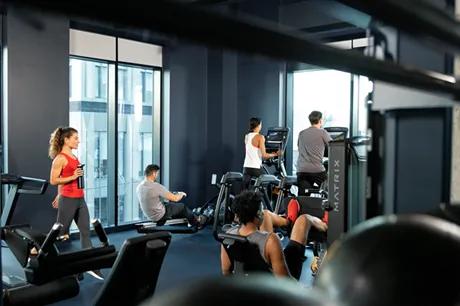
Before selecting equipment, ask who your facility is trying to attract. Bodybuilders, beginners, health-focused members, older adults and fitness racing competitors all have different expectations.
This decision should guide your equipment mix, layout and budget. It can also help you avoid buying based on personal preference or short-term trends.
Ask these questions early:
- Who is the primary audience?
- What training goals do they have?
- What equipment will they use most often?
- What level of instruction or support will they need?
- What areas are likely to be busiest at peak times?
The goal is to build a facility that supports the way members train, not just a facility that looks fully equipped.
Plan Your Gym Layout Around Training Zones
Most fitness facilities serve more than one type of user. A health club, community gym, hotel gym, apartment fitness room, university recreation center or performance facility may all need strength, cardio and functional training, but the size and mix of each zone will vary.
Start by matching the layout to the people who will use the space most often. A community gym may need approachable equipment for a wide range of ages and abilities. An apartment gym may need compact, durable equipment that works without constant staff support. A health club may need wider variety, more cardio capacity and dedicated areas for personal training or small group training.
The size of each zone should reflect expected use, not a standard formula. Performance-focused facilities may give more space to racks, platforms and free weights. General wellness facilities may need more pin-loaded machines, lower-impact cardio and open space for stretching or guided movement. Fitness racing facilities may need turf, sled space and duplicated equipment for group sessions.
Open space should be planned with the same care as equipment. Members need room to move between zones, rest between sets and train safely during busy periods. A facility with too much equipment can feel crowded and harder to use.
Strength Equipment for Commercial Gyms
Strength training is now central to health, performance and longevity. Historically, many people associated strength training with size and sport performance. Today, resistance training is widely valued for metabolic health, physical resilience and maintaining capability across age groups.
A commercial strength zone should include free weights, racks, benches, pin-loaded machines and plate-loaded machines. Each serves a different user need.
Matrix strength lines, for example, are often planned around different user confidence levels and training goals. A beginner-focused area may benefit from simple selectorized machines, while a performance-focused space may need racks, platforms and plate-loaded options.
Recommended Strength Equipment
Power racks and half racks on lifting platforms
These support squats, presses, deadlifts, pull-ups and many other compound lifts. They are highly flexible and help serious lifters train safely with heavy loads.
Pin-loaded / Selectorized machines
These are useful for beginners and general members because they are self-contained, easy to adjust and less intimidating than free weights. They also help facilities support users who need more guided movement paths.
Plate-loaded machines
These often appeal to experienced lifters who want a heavier and more direct strength training feel. They can add credibility to a strength zone and broaden the facility’s appeal.
Multiple units of popular machines
Buying one machine for every muscle group may look complete, but it can create queues at busy times. Duplicating high-use machines can improve member experience more than adding rarely used pieces.
Adjustable benches
Benches placed near dumbbell racks support pressing, rowing and seated strength exercises. Enough space should be left around each bench for spotting and safe movement.
Olympic bars and bumper plates
Training-grade bars are often the best fit for commercial use. Competition bars may have advanced engineering but can be less suitable for daily high-volume use. Bumper plates are useful for lifting platforms, while standard plates often suit benches and plate-loaded machines.
Dumbbells from 5kg to 50kg
This range covers most member needs. Where space allows, duplicate popular weights from 5kg to 30kg to reduce waiting during peak times.
Metal or urethane dumbbells
Metal dumbbells can last a long time but may need refinishing to stay presentable. Urethane dumbbells can cost more; they have the advantage of maintaining their appearance longer and are less likely to damage floors.
Beginner-friendly strength ranges
Facilities that want to attract new or less confident users should consider machines with simple adjustments and clear movement patterns. This can reduce gym intimidation and help new members train without constant staff support.
A single supplier can also create a more unified strength area through consistent colors, materials, adjustment systems and service support.
For example, Matrix Go Series strength equipment is designed around fewer adjustments and a more approachable user experience. It can be a useful consideration for apartment gyms, community fitness spaces and facilities that want to make strength training feel less intimidating.

Functional Training Equipment
Functional training zones were once used mainly to differentiate a facility. Today, they are a core part of many commercial gyms, health clubs, community fitness spaces and apartment fitness rooms, supporting personal training, small group training, fitness racing preparation and general conditioning.
Functional training is sometimes viewed as balance, coordination or movement work. In practice, it can support strength, cardio and conditioning goals for a wide range of users.
The priority is to keep the space open and flexible. Rigs and cable machines can add training options, but they should not dominate the center of the floor or make the area harder to move through.
Many functional rigs are square or rectangular. These can work well in the right setting, but they may take up significant floor space. The triangular configuration within the Matrix Connexus range is one example of how functional training equipment can make better use of corners or underused areas, creating multiple training stations while preserving open floor space for circulation and a wider variety of training activities.
Recommendations for Functional Training Spaces
Rubber flooring
Rubber flooring supports open training, bodyweight work, kettlebell exercises and areas near rigs or cable machines. It helps define the zone and protects the floor from repeated use.
Indoor turf
Turf gives a clear visual signal that the space can be used for sled work, sprint drills and athletic conditioning. It is especially useful for fitness racing preparation.
Medicine balls and slam balls
These support explosive throws, conditioning drills and group training. They are useful for facilities serving members who want dynamic training options.
Kettlebells
Kettlebells are space-efficient and support strength, conditioning and movement-based training. They work well for individual training, personal training and small group sessions.
Adjustable cable machines
Cable machines offer a wide exercise range in a compact footprint. In smaller spaces, multiple single pulleys can be more efficient than large dual-action pulley units.
Suspension trainers
Suspension trainers expand bodyweight training options without taking up much floor space. They are helpful for small group training and scalable exercises.
Soft plyo boxes
Soft plyo boxes perform the same core function as wooden boxes but can feel less intimidating and reduce injury risk during missed jumps or beginner sessions.
**Open floor space **
Open space is equipment in its own right. It allows members and trainers to run circuits, mobility work, warm-ups, loaded carries and small group sessions without disrupting other zones.
For facilities targeting fitness racing participants, include multiple sets of the weights used in common race categories. This helps more members train at the same time and supports event-specific preparation.
Cardio Equipment for Fitness Facilities
Cardio training remains central to health, weight management, endurance and fitness racing. The right cardio mix depends on your users, climate, facility type and expected daily usage.
In very hot or cold locations, indoor cardio may be one of the main reasons people join a facility. This makes cardio selection a business decision as much as a fitness decision.
Cardio equipment cost is often influenced by the console and the base unit. Some facilities may need high-spec touchscreens and entertainment options. Others may be better served by simple LED consoles for users who train with their own devices.
Matrix cardio equipment allows facilities to pair different frame and console options based on user needs, budget and environment. This is a useful example of why console selection should be part of the buying strategy rather than an afterthought.
Recommended Cardio Equipment
Motorized treadmills
Treadmills support walking, jogging and running, making them one of the most widely used cardio options. A cushioned deck, speed control and incline range can serve beginners through to regular runners.
Slatted-deck treadmills
These suit facilities with committed runners or performance-focused users. They can offer a different running feel and may be appropriate where high running volume is expected.
Self-powered curved treadmills
These work well in functional areas because they support sprinting, intervals and conditioning without needing the same setup as standard cardio-zone treadmills.
Rowers
Rowers provide full-body conditioning and can be used in cardio zones or functional areas. Magnetic rowers are quiet, while air-resistance rowers create a more performance-led training feel.
Cross trainers
Cross trainers suit a wide range of users and can be less intimidating than some high-intensity cardio options. They are helpful for members who want lower-impact cardio training.
Upright bikes
Upright bikes are familiar, accessible and useful for general fitness. They take up limited space and suit a wide range of training intensities.
Recumbent bikes
Recumbent bikes support users who need more seated stability. They are useful for beginners, older adults and members returning to exercise.
Studio bikes
Studio bikes support cycling classes, group training and individual high-intensity sessions. They are useful where programming is part of the facility offer.
Air bikes
Air bikes are useful for conditioning, intervals and fitness racing preparation. They fit well in functional zones and small group training spaces.
Cardio buying should consider daily usage, screen expectations, servicing intervals, energy efficiency and total cost of ownership. The right console choice can reduce unnecessary spend if users prefer their own phones or wearables.
Flooring, Storage and Space Planning
Flooring has a major effect on the training experience and the operation of the facility. It influences cleaning, noise, safety, visual identity and how members understand each zone.
Common gym flooring options include rubber, turf, carpet, stone, metal and polished concrete. The right mix depends on the activity in each area.
Storage is often overlooked, but it affects how smoothly a gym runs. Accessories, ropes, handles, plates and small equipment all need assigned locations.
Recommended storage choices include:
Weight trees near plate-loaded machines
This keeps plates close to where members use them and helps reduce clutter.
Dumbbell racks near benches
This supports natural training flow and reduces unnecessary movement across the floor.
Shelving for small accessories
Handles, ropes, bands and balls need clear homes so staff can keep the space organised.
Storage built into functional zones
This helps small group training areas reset quickly between sessions.

How to Choose a Commercial Gym Equipment Supplier
The equipment is only part of the buying decision. A supplier should support the project before, during and after installation.
This is where a total-solutions approach can be useful. Matrix supports facility planning, product selection, connected fitness, delivery, installation and service, which can help operators think beyond the initial purchase and plan for long-term use.
Major factors include:
Warranty and aftercare
This protects the investment and reduces risk after installation.
Delivery and installation
Check what is included, what costs extra and who manages the process.
Local service support
Service coverage affects downtime, member satisfaction and the life of the equipment.
Financing options
The lowest list price may not deliver the best total cost of ownership.
Software support
Connected equipment, consoles and digital tools need support beyond the initial sale.
Design and planning support
An experienced supplier can help match equipment to layout, member needs and operating goals.
A single supplier can simplify design, servicing and aftercare. Multiple suppliers may help target specific features, but they can make support and maintenance more complex.
Common Gym Equipment Buying Mistakes
Many equipment mistakes come from focusing on products before understanding the facility strategy.
Avoid these common issues:
- Buying based on personal preference
- Following trends without a long-term plan
- Overcrowding the floor
- Underestimating storage needs
- Buying too much variety and too few high-use machines
- Ignoring beginners and less confident users
- Treating flooring as a finishing detail
- Comparing price without service and maintenance costs
- Choosing equipment without considering resale value
A strong equipment plan should serve members, staff and the business model.
Frequently Asked Questions
What is the best commercial gym equipment to buy first?
Start with the equipment your target members will use most. For many facilities, this means a balanced base of strength machines, free weights, cardio equipment and open functional training space.
Should I buy one brand or multiple brands?
One brand or supplier can simplify design, servicing, colors, materials and aftercare. Multiple brands may help if you need a very specific feature or specialist product.
What equipment is best for beginners?
Beginners often benefit from pin-loaded machines, approachable cardio equipment, simple benches, open space and clear layouts. Equipment with minimal adjustments can reduce intimidation and help users train with less support.
Should I follow fitness trends?
Core training categories should come first. Strength, cardio and functional training have long-term value. Trend-led equipment can be included, but it should sit within a flexible layout so the offer can change later.
What equipment is needed for Hyrox-style training?
Fitness racing like Hyrox or DEKA Fit often needs treadmills or running space, rowers, sleds, kettlebells, wall balls, turf and open functional space for prepartion. Facilities should duplicate popular race weights where group use is expected.